- Sponcon Sports
- Posts
- The Silent Mistake Stealing Partner Launch Value
The Silent Mistake Stealing Partner Launch Value
A naming‐rights launch checklist your partners will love

Alex Kopilow
March 12, 2026
👋 Welcome back to Sponcon Sports, a weekly newsletter dedicated to sponsored content strategy in the sports industry!
Paid Partnership labels have officially arrived on X (Twitter).
The feature was announced last week by Nikita Bier, Head of Product at X, and gives creators and brands a built-in way to disclose sponsored posts directly on the platform.
From the tutorial Bier shared, the “Paid Partnership” label appears at the bottom of the post.
The goal is simple: reduce undisclosed promotions that erode trust in the feed and make it easier for creators to stay compliant.
But there’s an important nuance.
Unlike the tools on Instagram or Facebook, the label doesn’t highlight the partner brand. It only discloses that a partnership exists.
So if you’re running sponsored content on X, one best practice still matters:
Tag the partner in the post. Even if they don’t ask for it.
Two years ago, I wrote about why partner tagging should be standard practice in sponsored content. I’ll drop the article in the comments for anyone interested.
At the time, I laid out five reasons tagging benefits the partner.
One of those reasons was disclosure. The new Paid Partnership label now handles that piece.
But the other four still apply:
It increases the chances your audience notices the partner connected to the content.
It helps fans discover the partner’s account and learn more about their brand.
On X specifically, tagging links the brand to the reply thread, giving them the option to join the conversation.
It helps partners using social listening tools find the content they’re associated with, which can lead to additional earned moments.
Tagging partners remains a sore subject for many content teams. The concern is that it will make the post feel too promotional and hurt performance.
But the landscape has matured.
Fans follow teams, leagues, and creators knowing sponsorship is part of the ecosystem. Many of the best teams in sports consistently tag partners and still produce high-performing content.
When sponsored content struggles, it’s rarely because of a tag.
It usually comes down to creative that doesn’t match why fans follow the account, copy written in the partner’s voice instead of the team’s, or branding that overwhelms the content.
The new label on X solves the disclosure piece.
But if you want sponsored content to work harder for your partners, tagging them should still be part of the playbook.
In Today’s Edition:
Naming Rights Launch Lesson 🏟️
Premier Dating Show 💕
Yoshinobu Meets Yoshi ⭐️
🤝 SPONSORED BY PEAK CONFERENCE
Get $1300+ Off PEAK Tickets: Ends Friday 13th
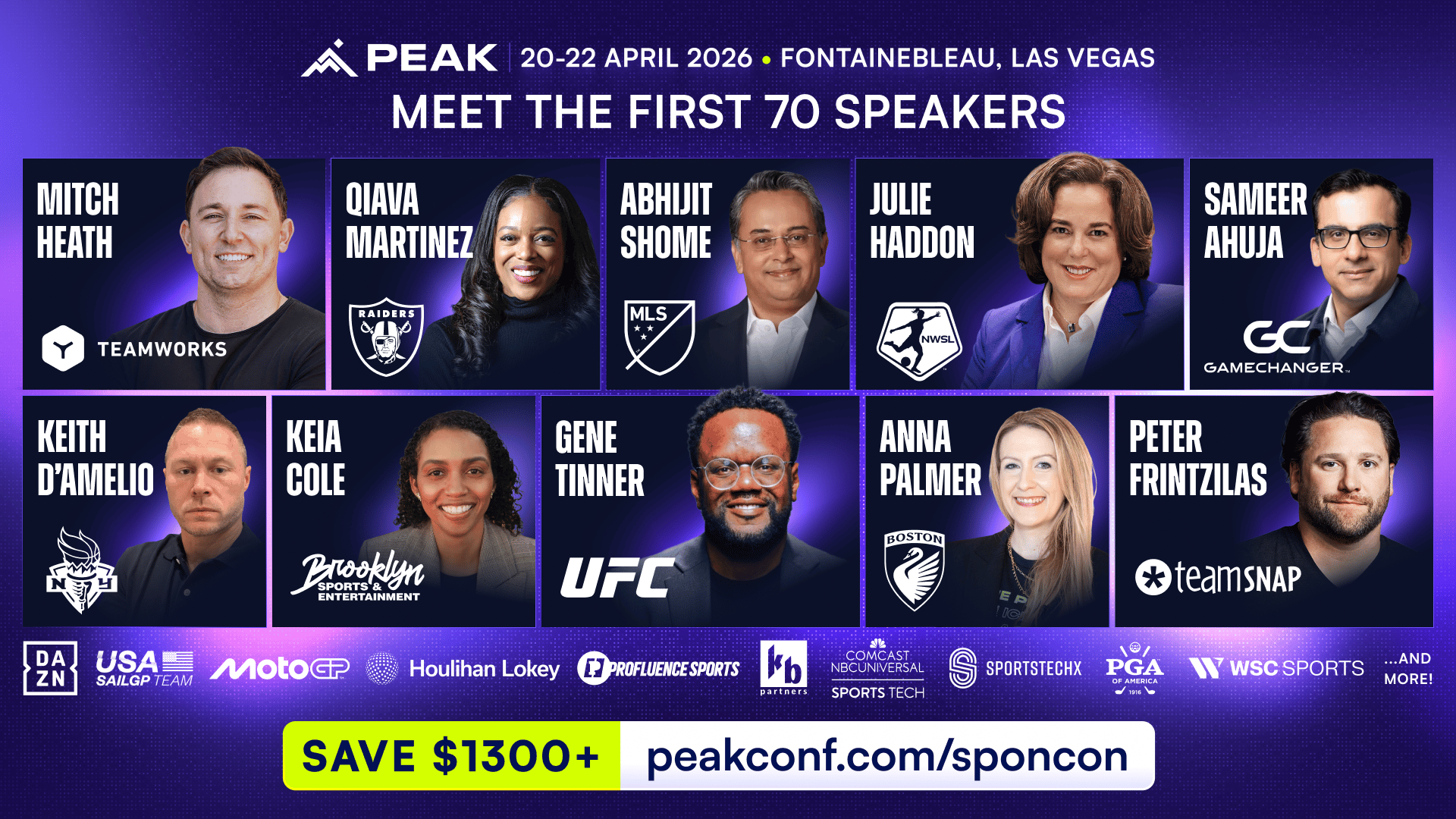
I’ll be speaking at PEAK 2026 (April 20–22) in Las Vegas and wanted to invite you to join us.
PEAK brings together 1,000+ sports executives, founders, and investors shaping the future of sport. Leaders from the Raiders, UFC, MLS, WTA, and more will be there alongside 100+ SportsTech companies, including NBA Launchpad startups, Hudl, Lenovo, TeamSnap, Pixellot, and others.
My session — “Turning Digital From Cost Center to Growth Engine (For You and Your Brand Partners)” — is part of the Next-Gen Revenue Strategies track.
The event will also cover AI-powered front offices, fan experiences, emerging leagues, smart venues, athlete performance, new revenue models, and sports investment.
Prices increase March 13, so grab your Sponcon Sports discount 👇️
🏊️ DEEP DIVE
Avoid This Costly Naming Rights Slip
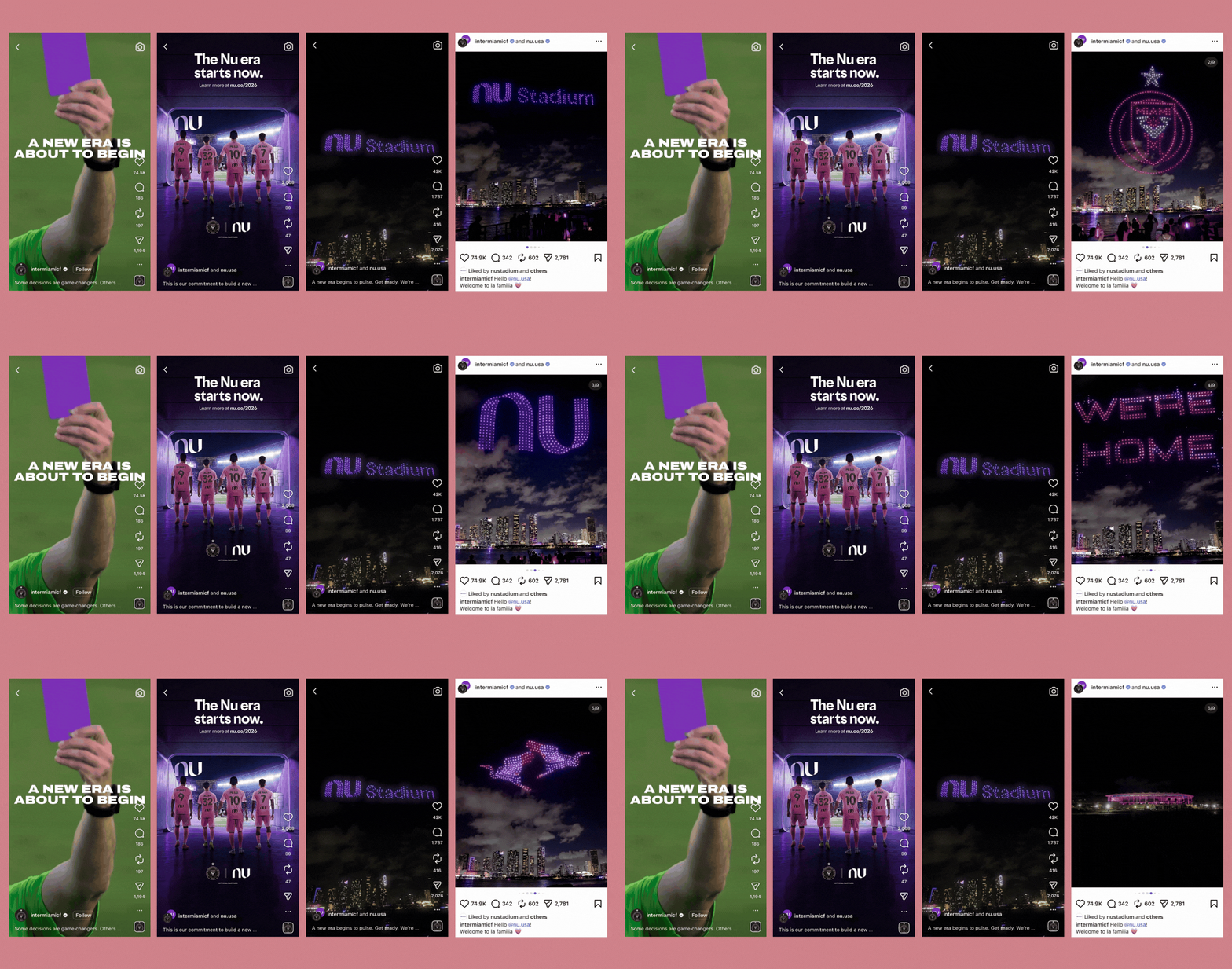
Last week, Inter Miami CF announced that Nubank would become the naming rights partner of its new stadium at Miami Freedom Park.
The venue will be called Nu Stadium.
It’s a massive deal. Naming rights partnerships like this shape the identity of a venue for years and represent one of the largest sponsorship investments a team can sell.
The creative rollout had a lot going for it. But a few small digital details left value on the table, the kind that are easy to overlook in the chaos of a launch.
Nu will almost certainly get tremendous value from this partnership. But moments like this are where the details matter most. So what should teams be thinking about when they launch a naming rights partner?
Because these moments are rare. And when they happen, every detail matters.
The Tease: A Strong Start
Inter Miami kicked things off with a clever teaser.
A player receives a purple card, a twist on soccer’s traditional yellow and red cards, paired with the message:
A new era is about to begin.
It was a smart, creative choice.
Purple is synonymous with Nubank’s brand, and using a card instantly connected the idea to soccer culture. Fans immediately understood something meaningful was coming.
As a teaser, it did exactly what you want: spark curiosity and get people talking.
The Hero Asset
The next morning, Inter Miami dropped the hero video.
Four players walk through the tunnel toward the pitch. The exit is designed to look like a transparent Nu card.
On screen: “The Nu era starts now.”
It’s a nice evolution of the teaser line, and the visual does double duty by showcasing the brand placement on the back of Inter Miami’s jersey, a new asset introduced across Major League Soccer this season.
The video also included a URL directing fans to learn more.
Creatively, it worked. But there was one problem.
The Missing Piece: Clarity
At no point in the post did the team explain what the announcement actually was.
“The Nu era starts now”… meaning what?
Fans watching the video had no way of knowing the stadium naming rights had been sold or that the club’s new home would be called Nu Stadium.
That detail didn’t necessarily need to appear in the video itself.
But it needed to appear somewhere.
The caption didn’t mention it.
No location tag to reference the stadium.
No related accounts were tagged.
For more than three hours, the post existed without explaining the news behind the creative. The announcement itself was already public through the press release and media coverage, but the club hadn’t actually said it on social media yet. And you can’t assume fans will learn it somewhere else.
Eventually, the reveal came in the next post: a recap of a drone show from the night before that spelled out Nu Stadium in the sky.
My guess is the reveal video required a tight edit turnaround and couldn’t be ready at the exact moment the news went public (or the brand took too long to review/approve).
That happens. The key is planning for it.
The Simple Fix
If there’s any chance your hero asset won’t be ready at launch, the simplest solution is clarity in the caption.
Something like: “Introducing, Nu Stadium. Our new home. Welcome to la familia, @nu.usa.”
You can still write clever copy.
You can still build a narrative around “new” and “Nu.”
But clarity matters.
Outside of the most dedicated fans, most people don’t know what you’re announcing unless you state it explicitly.
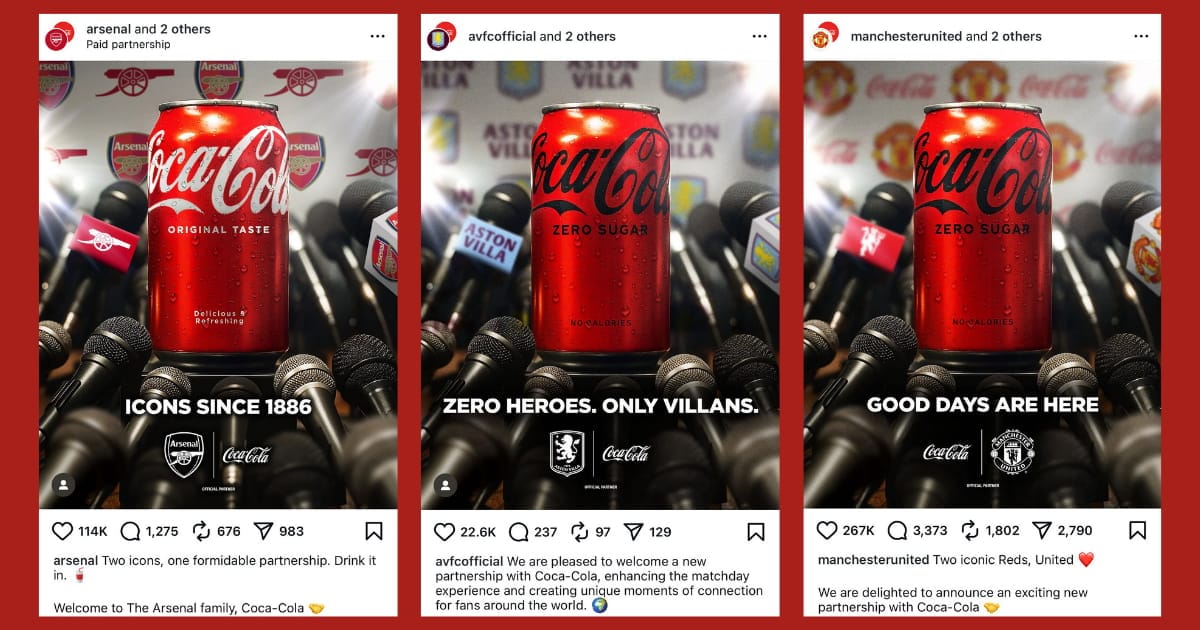
A good example comes from Coca-Cola when it unveiled partnerships with several Premier League clubs in 2025.
The headlines and copy played creatively with the brand, but each caption still spelled out the core message: Coca-Cola is now a partner of the club.
Creative storytelling and clear messaging should work together. But there are also operational ways to avoid this scenario altogether.
If the reveal video required a fast turnaround, there were a few options available:
Prep the social team in advance.
If everyone knows the timing of the announcement, the content team can plan for a tight edit window the night before and have the reveal video ready early enough to allow brand review before the news breaks.
Outsource the edit.
For a naming rights deal of this magnitude, the cost of outsourcing a quick-turn video edit is minimal. Bringing in outside help ensures the asset is ready when the announcement goes live.
Use real-time approval channels.
Creating a WhatsApp group with the partnership lead, content lead, and brand lead allows final creative to be reviewed and approved in real time. If expectations are set early — for example, asking the brand for feedback within 30 minutes — partners are usually open to the process if it means the launch goes exactly how everyone envisioned.
Where The URL Led Fans
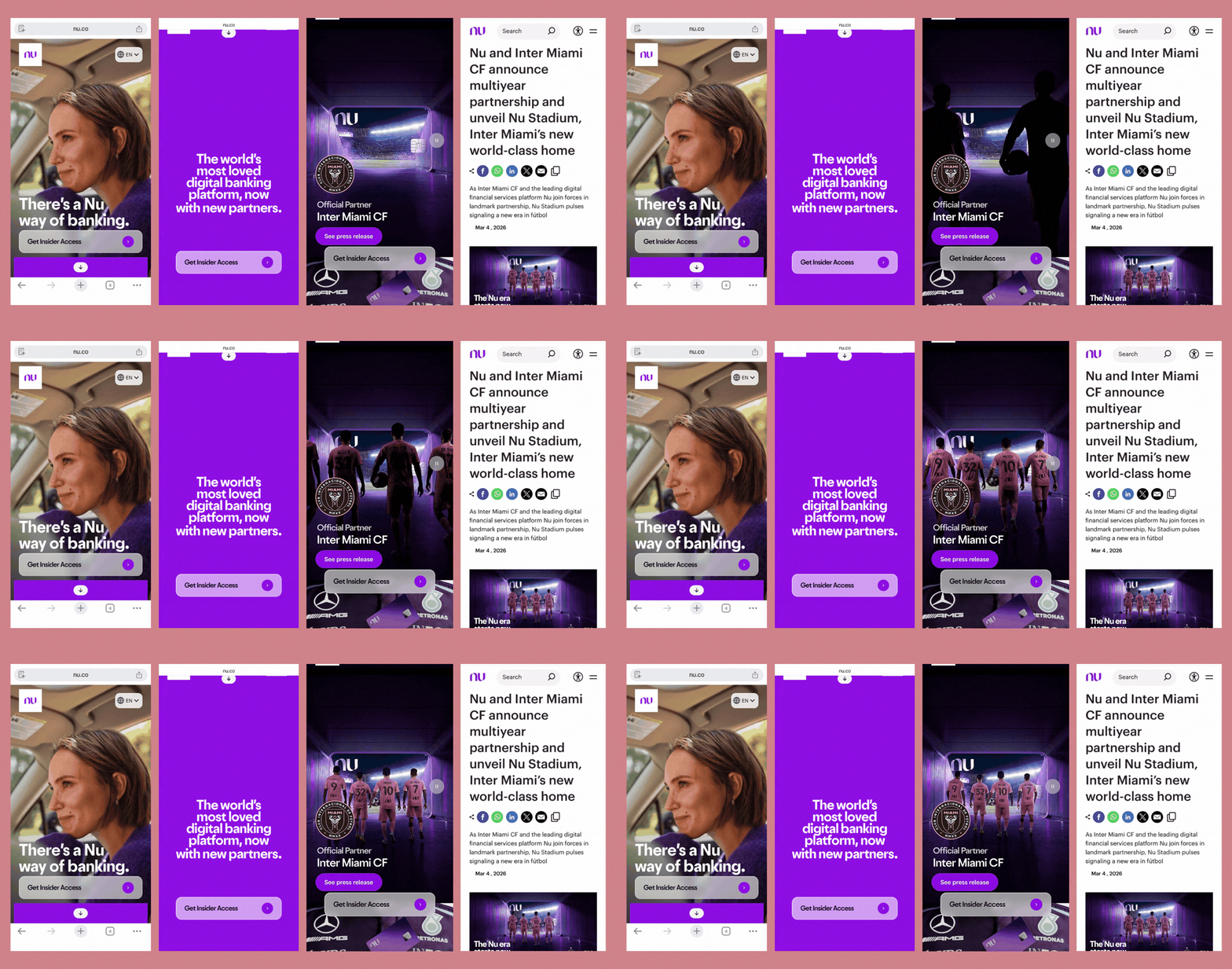
The URL shown in the hero asset — Nu.co/2026 — didn’t immediately clarify things either.
The landing page opened with a picture of a woman in a car and the line:
“There’s a Nu way of banking.”
Only after scrolling did fans see mention of new partners.
Scroll again, and the hero creative appeared, linking to the press release.
The headline revealing Nu Stadium only appeared once you clicked through to that press release.
Even fans who followed the link still had to work to understand the announcement.
That said, I did like that Nu had a persistent “Get Insider Access” button that turned launch interest into email signups and ongoing owned audience.
The Small Details That Add Value
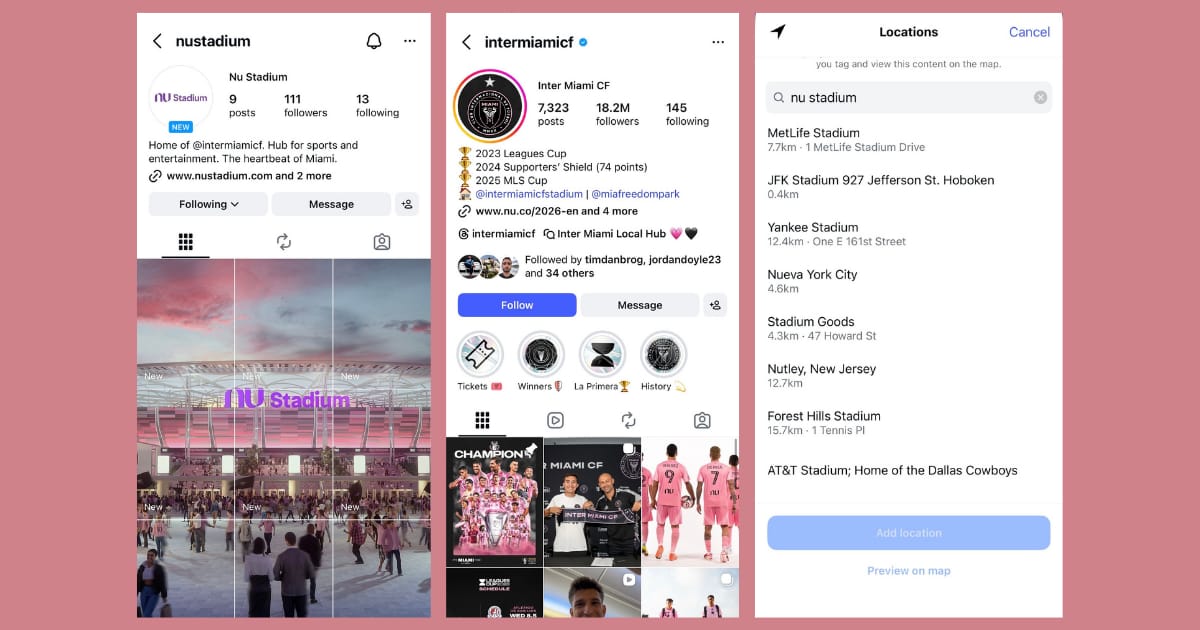
Beyond messaging, a few operational details could have amplified the launch.
1. The stadium account wasn’t tagged
A new Instagram account — @NuStadium — existed, but it wasn’t tagged in any of the launch posts.
That’s a missed opportunity.
A naming rights reveal is one of the biggest visibility moments that account will ever have. Tagging it through Instagram’s collaboration tool could have instantly driven thousands of followers while reinforcing the stadium’s new identity.
2. The Instagram bio still promoted the old stadium
For days after the announcement, Inter Miami’s Instagram bio read:
“🏠 @intermiamicfstadium | @miamifreedompark”
The outgoing venue was highlighted. The entertainment district was highlighted. But the new one wasn’t?
One of those accounts should have been swapped immediately after the launch asset was posted to direct traffic to the new account.
3. No branded location tag
Another small but meaningful detail: as of today, there is not a “Nu Stadium” location available to tag in posts.
Location tags are powerful distribution tools. They allow:
teams and brands to reinforce the name in every post
media and creators to tag the venue
fans and visitors to generate their own content tied to the location
That organic content becomes part of the value of a naming rights deal.
Without the location set up, that flywheel never starts.
4. Countdown content skipped the stadium account
In the days after the reveal, Inter Miami started a “30 days to Nu Stadium” countdown on its main channels (X and IG Story), but those posts never appeared on @NuStadium.
If the goal is to train fans that the new handle is home base for the venue, every countdown, hype post, and opener touchpoint should live there too.
Launch Moments Require a Run of Show
None of these issues are catastrophic. And Nu will almost certainly receive tremendous value from this partnership.
But launches like this only happen once.
The best ones treat the announcement like a live production, with a detailed run of show that brings together:
sponsorship
brand marketing
content and social teams
agency partners
and the partner’s internal stakeholders
When everyone walks through the moment together beforehand, these small details surface early. And the result is a launch that feels seamless.
The Takeaway
Naming rights partnerships are massive investments.
The creative is important.
The storytelling is important.
But the operational details — captions, tags, bios, locations, timing — are what ensure the announcement actually lands and that the maximum value is generated for your brand partner.
Because in moments like this, clarity and distribution are just as important as creativity.
Got Partnership Questions? I’m offering free office hours for anyone looking to brainstorm, solve workflow challenges, or discuss digital revenue strategy.
🔍️ SPONCONSPIRATION
Steal These Ideas
Shout out to Arsenal! Their new mobile app launch felt like the debut of a TV channel. Among the new lineup of shows on The Arsenal is The Big Match, a Gooners dating show presented by L'Oréal Paris.
LEGO isn’t slowing down the creativity in its Formula 1 partnership. To promote its LEGO® Editions Scuderia Ferrari HP helmet sets, the brand built life-size LEGO brick helmets for Charles Leclerc and Lewis Hamilton. Meanwhile, over in F1 Academy, Esmee Kosterman’s actual helmet was perfectly on brand.
While on its trophy tour, the UEFA Europa League teamed up with former champion Ivan Rakitić for a kicking challenge. The task: land footballs into the luggage storage of a FlixBus.
There was also some great theme night and promo-item content last week. The Philadelphia Flyers recreated an iconic scene from The Office to promote The Office Game, presented by Peacock. Across the country, the Los Angeles Dodgers featured pitcher Yoshinobu Yamamoto in an announcement video unveiling a Yoshi bobblehead, available to fans on March 31 and presented by The Super Mario Galaxy Movie.
I love this fresh twist on the bench reaction cam from the Atlanta Hawks. They’re calling it Player Pulse, creating a strong tie-in to partner Sharecare, a digital health and wellness platform.
Major League Baseball’s new Automated Ball-Strike (ABS) system is debuting this season. T-Mobile is the presenting partner, with its 5G technology powering the system. Last week, the league began tagging the brand in ABS highlight clips, extending the partnership from the broadcast into social content.
Not a subscriber yet? Join over 4,000 sports industry professionals, from the NFL to the Premier League, who read Sponcon Sports weekly to learn about sponsored content strategy in sports.
🚨 ICYMI
What To Watch For
Digital Partnership Playbook: I joined Nick Lawson and Rich Franklin on The Inches Podcast to discuss how teams can build, price, and manage digital sponsorship inventory effectively.
Creator Naming Rights: The Chicago Bulls granted basketball creator Jesser official naming rights to a regular season game as part of a full takeover, a first for the NBA and possibly any major professional sports league [via Kamil Strycharz].
Creator Content University: Coastal Carolina University is bringing creators into this year’s Spring Game. The Chants will host Snapback Sports’ annual 7-on-7 flag football game against BDGE on the teal turf immediately following the Spring Game [via Jack Settleman].
Suns Strategy Lesson: Ron Li, the Phoenix Suns’ VP of Fan Intelligence and Partnership Strategy, shared the key skill needed to work successfully across departments [via Sean Callanan - Sports Geek Podcast].
F1 Partnership Activation: Kim Hobson breaks down how Formula 1 partnerships actually work inside a team environment, and what agencies need to know to succeed.
🏃BEFORE YOU GO
How I Can Help You
Digital Partnership Overhaul: I help partnership leaders fix undervalued digital inventory and install the valuation and packaging systems that unlock $5–10M in revenue—especially inside organizations where sales and content operate in silos.
On-Call Deal Support: I plug in as a digital partnerships specialist during key sales windows, helping teams win new business, renewals, and upsells with stronger decks, smarter packaging, and digital-first ideas that actually perform.
Workshops That Fix Workflow & Content: I train content and partnership teams to collaborate better, generate fan-first sponsored content, and scale digital without burnout—leaving them with clearer processes and repeatable systems.
P.S. If digital revenue or next season’s targets are top of mind, reply to this email or book a free 30-minute intro call.
Reply